

From Forbidden to Freedom: The History of Sex Toys in South Africa

The History of Sex Toys in South Africa

There was a time when owning a sex toy could put you on the wrong side of the law. Today, millions of adults around the world openly embrace sexual wellness, personal pleasure and self-discovery. So how did we get here in South Africa?
Imagine living in a time when something as personal as owning a vibrator, dildo or other intimate accessory could be considered a criminal matter.
No online shopping. No discreet deliveries. No browsing through hundreds of products from the comfort of your home. Just a society where discussions about sex were often whispered, personal pleasure was surrounded by shame, and anything outside the accepted social norm could attract serious judgement.
It sounds difficult to believe today, doesn't it?
Yet the history of sex toys is closely connected to a much bigger story: the struggle between personal freedom, conservative social attitudes, government control and the right of adults to make private decisions about their own bodies.
And South Africa has its own rather interesting chapter in this history.

When pleasure was treated as something to be ashamed of
For generations, sexuality was heavily influenced by conservative religious beliefs, social expectations and restrictive legislation.
In many societies, sex was considered something that belonged strictly within marriage and was primarily associated with reproduction. Discussions about sexual enjoyment, particularly female pleasure, were often discouraged or regarded as inappropriate.
Masturbation was condemned. Sexual experimentation was frowned upon. Products designed to enhance personal pleasure were viewed with suspicion.
The problem wasn't necessarily the products themselves. It was the broader belief that individuals should not have complete freedom to explore their own sexuality.
This created an environment in which sexual wellness was pushed into the shadows.
People still had desires, curiosity and questions, of course. Human sexuality didn't disappear simply because society preferred not to discuss it.
Instead, conversations became private, information was difficult to access, and products associated with personal pleasure were frequently surrounded by stigma.
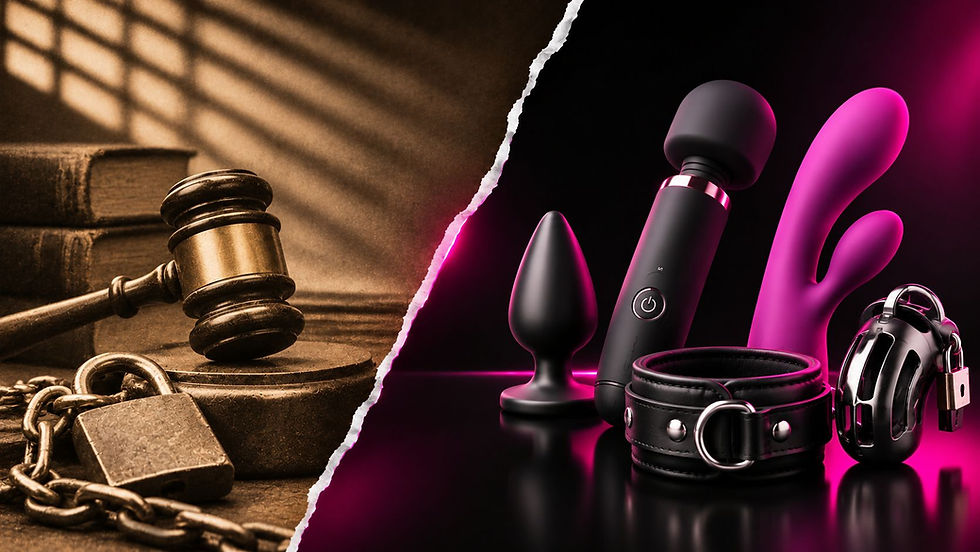
South Africa's history: When sex toys were actually restricted by law
South Africa's history provides a particularly striking example of how legislation once attempted to regulate private sexual behaviour.
During the apartheid era, the country's legal framework included laws that reflected the conservative and controlling attitudes of the time.
One particularly relevant provision was Section 18A of the Immorality Act 23 of 1957.
This legislation included restrictions relating to certain objects associated with sexual stimulation and pleasure.
In other words, the law did not simply reflect society's discomfort with discussing sex. It went further by placing legal restrictions on products associated with adult sexual pleasure.
Think about that for a moment.
An ordinary adult wanting to explore their sexuality privately could find themselves navigating a legal environment in which the products associated with that exploration were restricted. It is a reminder of just how differently personal freedom was viewed in the past.

Editor's Note: The image on the left represents an era when personal freedom and individual choices around sexuality were often restricted by prevailing social expectations, cultural norms and legislation. For generations, there was often only one socially accepted view of what relationships, intimacy and normality should look like.
This image is not intended to criticise religion or anyone's personal beliefs. Faith and personal values remain important to many people, and attitudes continue to evolve. Today, there is growing recognition across many communities that personal beliefs, individual freedom and the right to make private choices can coexist.
Thankfully, society has made significant progress towards greater acceptance, understanding and respect for individual differences.

The turning point: 2007
Things eventually changed.
The Criminal Law (Sexual Offences and Related Matters) Amendment Act 32 of 2007 brought significant changes to South Africa's sexual offences legislation.
Among its provisions, the Act expressly repealed Section 18A of the former Immorality Act.
The legislation came into effect on 16 December 2007.
This was an important development in the country's legal history. The old restrictions relating to sexual stimulation devices were removed, reflecting a significant shift away from the previous approach to regulating private adult sexuality.
Today, adults in South Africa can legally own and purchase sex toys for personal use.
The change is worth remembering because it wasn't that long ago that the law treated these products very differently.

Society changed, but the stigma didn't disappear overnight
Although legislation changed, social attitudes did not transform quite as quickly.
For years, sex toys continued to carry an unnecessary stigma.
People were sometimes embarrassed to walk into adult stores, uncomfortable discussing their interests, or worried about what others might think if they discovered they owned intimate products.
Even today, some people associate sex toys with something unusual, inappropriate or reserved for particular lifestyles.
But why?
There is nothing inherently wrong with an adult choosing to explore personal pleasure in a private, consensual and responsible way.
A person doesn't need to justify owning a vibrator, dildo, masturbator or any other intimate accessory. Nor does owning a sex toy say anything definitive about someone's relationship status, sexual orientation or personal identity.
Some people use them independently. Others incorporate them into relationships. Some enjoy experimentation, while others simply want to understand their own preferences better.
There is no single correct way to approach personal pleasure.

The evolution of sex toys: From primitive designs to modern technology
The products available today are almost unrecognisable compared with many of the early devices associated with sexual pleasure.
The history of pleasure devices stretches back centuries, although historical examples and their intended uses are not always easy to establish.
What is clear is that technology, materials and manufacturing have dramatically changed the industry.
1. Early mechanical devices
Early mechanical devices were often crude, cumbersome and far removed from the sophisticated products available today. Some historical medical devices were also developed in a period when women's sexuality was poorly understood and frequently misunderstood.
It is important to separate historical medical practices from the modern sex toy industry, but both form part of the broader history of how society approached sexuality.
2. The introduction of electric vibrators
Electric vibrators became increasingly available during the late nineteenth and early twentieth centuries.
Over time, their marketing and availability shifted, and they gradually became more recognisable as personal pleasure products.
The development of smaller motors, improved electrical components and more accessible manufacturing helped transform the market.
3. The silicone revolution
Modern materials changed everything.
Body-safe silicone became an important material in the industry because of its flexibility, durability and non-porous surface when properly manufactured and finished.
Other materials, including ABS plastic and stainless steel, also became popular. Consumers began to have more choices in terms of texture, firmness, design and functionality.
4. The age of smart sex toys
Today, technology has taken the industry even further.
Rechargeable devices, app-controlled products, remote connectivity and customisable vibration patterns have introduced entirely new possibilities.
Some products can be controlled through smartphone applications, allowing users to customise settings and explore interactive features.
What was once a heavily restricted category has developed into a diverse global industry combining design, technology and personal wellness.

Sex toys are no longer just about pleasure
One of the biggest changes in the modern industry is how people understand the purpose of intimate products.
Sexual wellness is increasingly discussed as part of broader conversations about personal wellbeing, relationships, communication and body awareness.
Sex toys can serve different purposes for different people.
Personal exploration: They can help adults discover their preferences, understand what they enjoy and become more comfortable with their own bodies.
Relationship exploration: Couples may introduce intimate products as a way to communicate, experiment and explore shared interests.
Sexual wellness: Some people use specific products as part of their broader approach to sexual wellbeing and intimate health.
Curiosity and experimentation: Others simply enjoy discovering something different, exploring new sensations or trying products they have never encountered before.
There is no requirement to own a sex toy, just as there is no reason to feel embarrassed about choosing to own one.
Personal choice is exactly that: personal.

The modern sex toy industry is incredibly diverse
The days when the industry was associated with a handful of basic products are long gone.
Today's adult stores offer an enormous range of products designed around different preferences and interests.
Some of the most recognisable categories include:
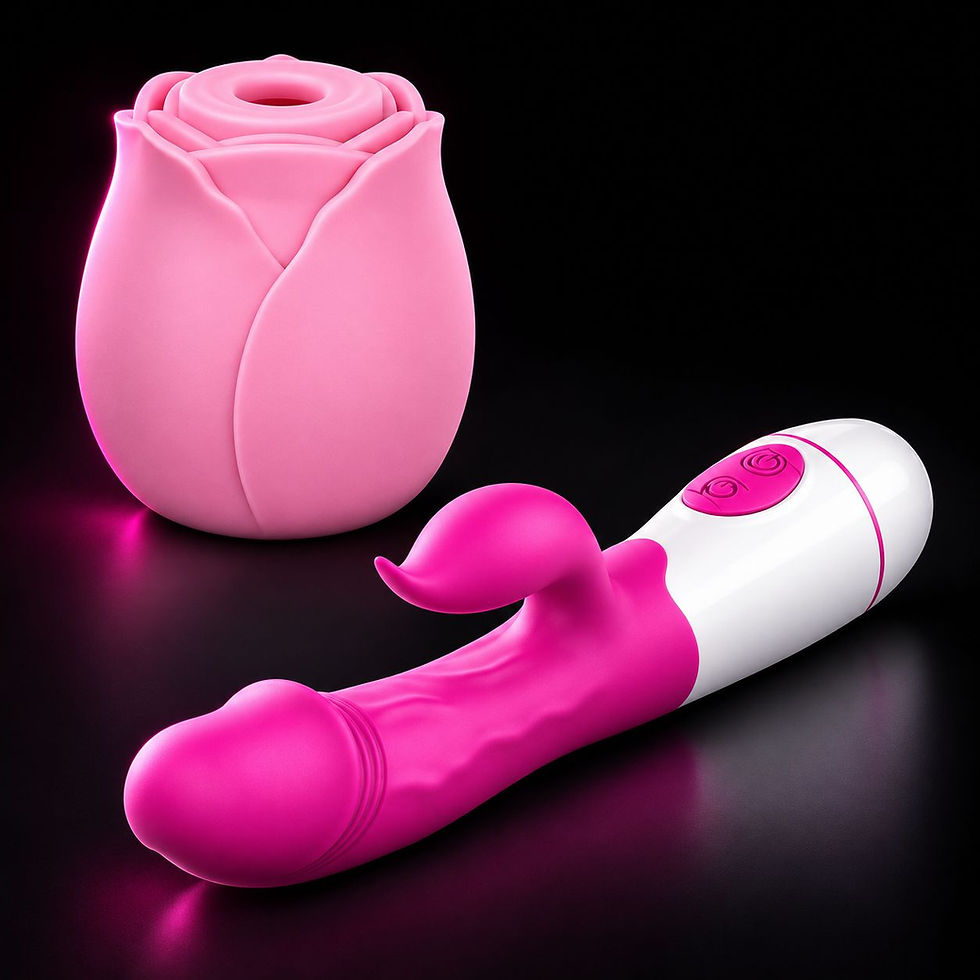
Vibrators: Available in countless shapes, sizes and stimulation patterns.
Dildos: From traditional designs to imaginative fantasy creations.
Masturbators: Products designed for individual exploration.
Butt plugs: Available in different shapes, sizes and materials.
BDSM and kink accessories: Equipment for adults interested in consensual power exchange, restraint and other forms of exploration.
Chastity devices: Products associated with consensual chastity play and control dynamics.
Pup play accessories: Including hoods, tails and other roleplay equipment.
Couples' toys: Products designed to introduce shared experiences into relationships.
The diversity of the industry reflects something important: adult sexuality is not one-dimensional.
People have different interests, preferences and boundaries. A modern adult store should recognise that diversity rather than assume everybody wants the same thing.
Personal freedom comes with personal responsibility
Moving away from outdated restrictions doesn't mean abandoning common sense.
Responsible use remains an important part of sexual wellness.
When purchasing intimate products, adults should consider:
Material quality: Choose reputable products made from body-safe materials.
Hygiene: Clean products according to the manufacturer's instructions.
Lubrication: Use compatible lubricants, particularly with silicone products.
Communication: In shared experiences, discuss boundaries, preferences and consent.
Product suitability: Choose products appropriate for their intended use.
Storage: Keep intimate products clean and stored appropriately.
Consent is fundamental. Every activity involving another person should be voluntary, informed and respectful of everyone's boundaries.
Personal freedom should never come at the expense of somebody else's.

South Africa in 2026: How far have we come?
Looking back, the contrast is remarkable.
In the past, South African legislation included restrictions specifically targeting objects associated with sexual stimulation.
Today, adults can browse online stores, compare products, read educational articles and purchase intimate accessories without the old Section 18A restrictions hanging over them.
The internet has also transformed access to information.
People can research materials, understand product differences, learn about hygiene and make more informed purchasing decisions.
Discreet online shopping has made the experience considerably more accessible for those who prefer privacy.
There is still work to do when it comes to eliminating embarrassment and outdated attitudes, but the conversation has certainly moved forward.
And perhaps that is the most important change of all.

Why should anyone feel ashamed of personal pleasure?
Think about how many everyday products we purchase without giving them a second thought.
We buy skincare products, grooming accessories, fitness equipment and personal wellness products because we want to look after ourselves and feel comfortable.
Intimate products deserve the same sensible, informed approach.
An adult purchasing a sex toy isn't making a political statement, breaking social conventions or asking for approval.
They're making a personal purchasing decision.
Whether someone prefers a simple vibrator, an adventurous fantasy dildo, a sophisticated app-controlled device or something completely different, that choice belongs to them.
Society has spent far too much time treating conversations about sexuality as something embarrassing.
Perhaps it's time to leave that attitude where it belongs: in the past.

From prohibition to personal choice: The future of sexual wellness
The story of sex toys is about much more than the evolution of a product category.
It is a story about changing attitudes, personal autonomy and the gradual recognition that consenting adults should have the freedom to make private decisions about their own bodies.
South Africa's repeal of Section 18A in 2007 was an important part of that journey.
Today, the adult industry continues to evolve through better materials, innovative designs, technology and a growing emphasis on education and responsible use.
And while people will always have different opinions about sexuality, one thing should be relatively simple:
Adults should be able to make informed, consensual choices about their own pleasure without unnecessary shame or judgement.
After all, we have come a long way from the days when the law itself tried to dictate what adults could keep in their bedside drawers.

Explore the world of adult wellness with MoodTime
At MoodTime, we believe personal pleasure should be approached with confidence, curiosity and an open mind.
Since 2011, we've been bringing adults in South Africa access to an ever-growing selection of intimate products, from everyday essentials to unusual, exotic and imaginative creations.
Whether you're exploring something for the first time or looking for something a little more adventurous, there's a whole world of possibilities waiting to be discovered.
Explore our collection: MoodTime Online Store
Explore freely. Choose confidently. Enjoy responsibly.
MoodTime – Made for Pleasure.

The History of Sex Toys in South Africa


Comments